< news
Porto hosted the filming of the adaptation of “Ternos Guerreiros”, by Agustina Bessa-Luís
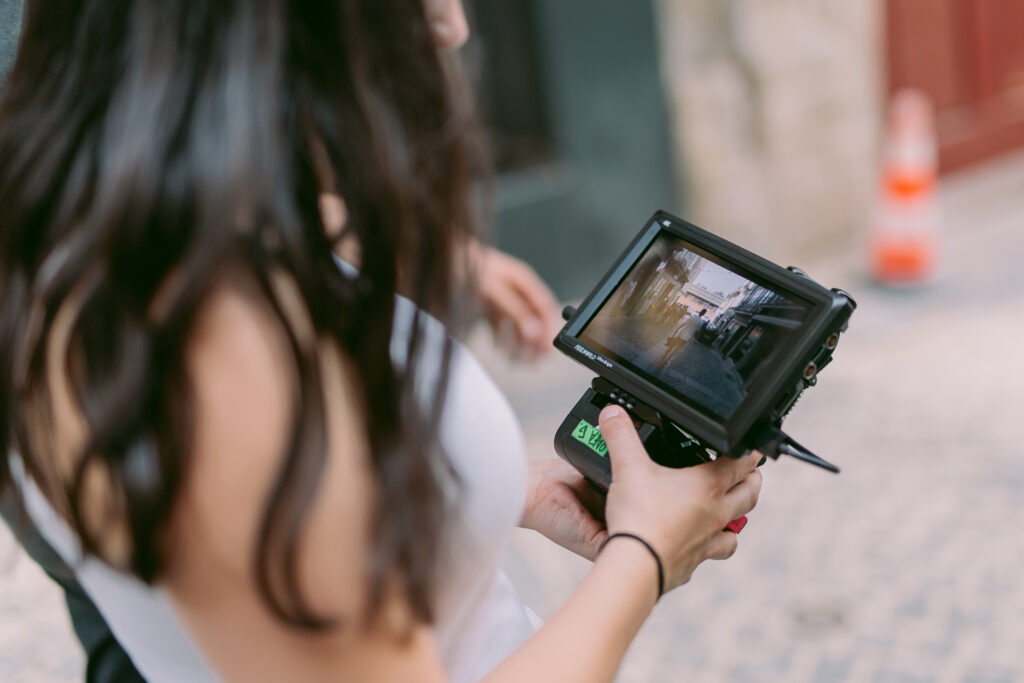
Porto was one of the locations chosen for the filming of Ternos Guerreiros, a new Leopardo Filmes production, directed by Francisco Botelho, which freely adapts for the cinema the novel of the same name by Agustina Bessa-Luís. The feature film will also be extended into a series format, with six episodes.
With a screenplay by Filipa Martins, Vasco Gato and Francisco Botelho, the film revisits the work of Agustina Bessa-Luís to address themes such as power relations, patriarchy, the crisis of values and amorality, placing them in dialogue with questions that remain profoundly contemporary.
The desire to bring Ternos Guerreiros to the cinema arose from an invitation by the producer Paulo Branco, who had known and followed the novel since the 1960s. For Francisco Botelho, who until then was unfamiliar with the work, contact with the book revealed a narrative surprisingly close to the present, centred on “mechanisms of power, behaviours, and human structures that persist”. The adaptation also represents, for the director, the opportunity to give visual form and body to Bessa-Luís’s literary universe through a young generation of actors, building a new perspective on the thinking of one of the great authors of Portuguese literature.
In Ternos Guerreiros, Francisco Botelho found a story capable of directly challenging the contemporary viewer. The complexity of the characters and the way Agustina addresses power relations are central to the director’s reading, and he highlights the author’s capacity to escape simple classifications of victims and culprits. “The viewer will recognise behaviours. They will recognise power relations, subtle forms of violence, people who live conditioned by social expectations and who, at the same time, wish to escape them,” explains Francisco Botelho.
For the director, the strength of Bessa-Luís’s writing also lies in its resistance to easy answers. “She writes characters who are free in the most uncomfortable sense of the word: capable of the best and of the worst. Today we are very fond of organising the world into victims and culprits, into right and wrong. Agustina almost always distrusts these categories, and forces us to remain in a zone of ambiguity. That is where her work vibrates and resists most.”
That ambiguity is also one of the characteristics that allow the work to cross decades and continue to dialogue with the present. The reflection extends to the journey of Domingos, the male protagonist, and to the idea that lifestyle can become a substitute for the meaning of life. “We devote more and more time to building, and managing, an image of how we want to live, or of how we would like to live, and less time questioning the very reasons for it,” states the director. More than offering answers, the film seeks to create a space for reflection and questioning.
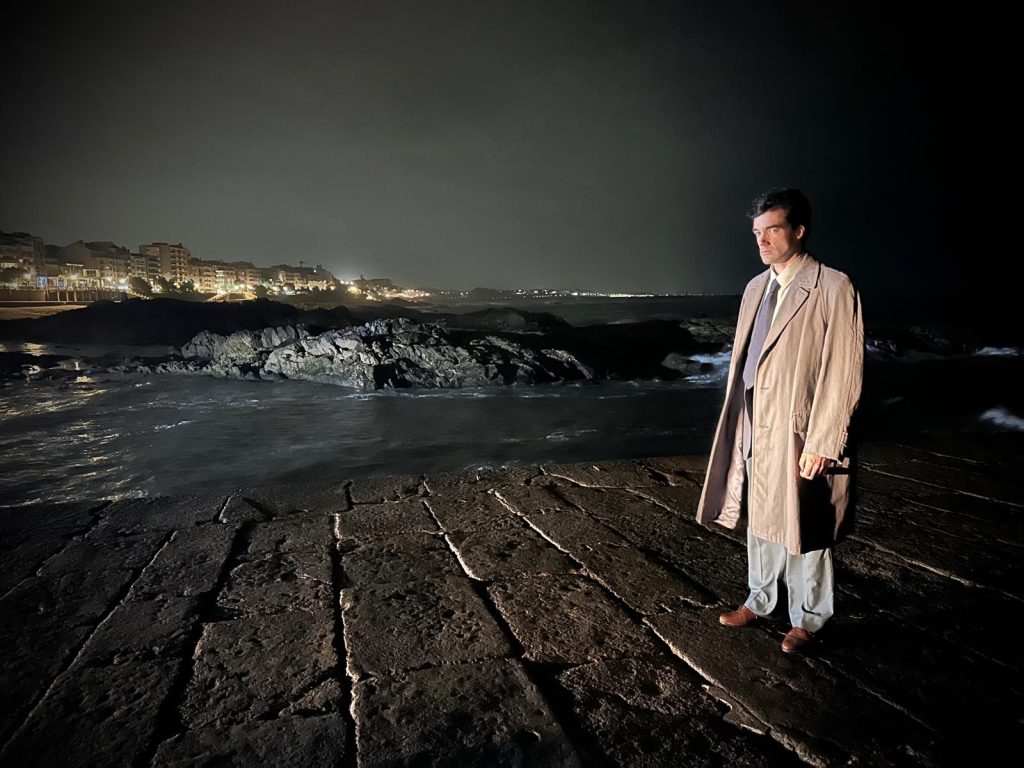
In the city of Porto, the team filmed at several emblematic locations. Chief among the main sequences is the filming at Praia do Molhe, in Foz, which, according to Botelho, “ends up determining a large part of the film”. The Grande Hotel de Paris, Avenida dos Aliados, Rua das Taipas and the Ribeira were also settings for this production.
Porto’s presence takes on a significant dimension in the film’s visual construction, contributing to the recreation of 1950s Portugal. However, for Francisco Botelho, the period should not be the centre of the narrative, nor become a mere exercise in historical reconstruction. “For me, in a period film, the period should never be the main subject,” he explains. Historical rigour is important, but it must serve the narrative, since “what really crosses time is not the walls, the objects or the costumes — it is human relationships”. The intention, then, is for viewers to stop looking at the story as if observing a distant past, and to recognise in the characters, in their desires and in their conflicts, questions that remain part of the present.
With the filming having passed through Porto, Ternos Guerreiros joins other Leopardo Filmes productions that have found in the city spaces in which to develop different cinematic universes. Among the projects that have recently passed through Porto are Memórias do Cárcere, by Sérgio Graciano, and Aqui, by Tiago Guedes, reinforcing the city’s position as a territory of cinematic creation and production and its capacity to host different eras, narratives and languages.